


FJORD is a 501(c)(3) non-profit artist-run collective that elevates the visibility of both emerging and established artists within Philadelphia and beyond by facilitating exhibitions, curatorial projects, collaborations, and public programming that highlight diverse media and artistic concerns.
1720 N. 5th Street G2, Philadelphia, PA 19122
Gallery Hours: Saturdays 1–5 p.m. or by appointment
Space On Space: There’s such an abundance of artist-run spaces here in Philly. What do you think it is about Philadelphia that allows artist-run spaces to crop up and often flourish?
FJORD: Philly has the perfect balance of (mostly) affordable cost of living, city size, climate, and an economic structure, which means that we create our own community and dialogue. This is similar to how Eastern European artists created the discourse and platforms around their work after the fall of the Berlin Wall in 1989, when they suddenly had a connection to the Western “art world” but needed to establish visibility. There’s a lot of interesting scholarship on this that has come to light in recent years, and while a very different scenario materially, it is something which we can relate to in our own way.
There’s a reality to the difference between the art economy of Philadelphia and larger cities with more prominent art economies like New York or Los Angeles. The gallery economy for emerging artists is more robust in New York and LA as a result of significantly higher international population and capital density. People get touchy when you compare Philly to New York; this is not about that at all. New York is the finance capital of America. Therefore, it is the art capital of America. Even Chicago, which is a comparably-sized city and has many artist-run spaces, also has a higher capital density, which makes the whole environment more competitive and less collaborative. Perhaps with lower financial stakes, we are doing it for the love of the game in Philly.
It’s real freedom to make art because you love to, to create community because you love to, to show up for your friends. Because there isn’t the same pressure to make art for the market, you can really explore your practice and ideas fully. People are making incredible work in this city, and they are absolutely hustling, too.
On top of that, Philly has a history of collective action. There is something about this city that makes people come together and create powerful movements. The 250th Commemoration is coming up, which, for all its deeply compromised histories, is about a group of people organizing in order to self-determine. Other examples include MOVE, the landmark Civil Rights organizing around Girard College integration, 1965’s ECHO protest, and community-based NO ARENA PHL in Chinatown and the Stadium Stompers in the Temple area of North Philadelphia. People speak their minds here. They are engaged in the neighborhoods in which they live. Maybe there’s something in the water (there definitely is). Someone should write their PhD thesis on the history of collectivism, and particularly art collectives, in this city. There’s a story here to tell. We’re part of it.
SOS: You became a 501(c)(3) nonprofit at some point during the last few years. What did that change in practice? Did the formality of nonprofit status create tensions with the DIY ethos that started FJORD in a Frankford Avenue row house?
FD: It changed very little in terms of our curatorial ethos but gave us a tremendous amount of security and stability in terms of our finances and legal status. Obviously, as a 501(c)(3), we are now eligible for additional funding streams, but equally as important, it has insulated individual members from personal financial and legal liability. When we were on Frankford Ave, we paid our rent to a shady middleman with a wad of cash. Now we have a real structure with all its responsibilities and benefits. The DIY ethos won’t change, and if anything, having less stress around the legitimacy of our legal status means we have more freedom to focus on the quality of our programming.
SOS: Something special about FJORD is how you curate shows as a collective. The curatorial strength of your collective was very apparent when I viewed Diorama of a Sunrise Setting, which was such a strong show. You are also invite-only for members, so I assume there’s significant care and consideration when it comes to determining who’s invited to join. Can you share more about how your group collaborates?
FD: We have enough structure in place internally to make sure everything that needs doing gets done, but enough flexibility that we give our members space to prioritize their own lives and practices. So when someone has a residency, or a big show coming up, or something important going on in their personal lives, we make space for them. Similarly, when a member comes to a meeting with an exciting idea for a show, we make space. We don’t have a strict schedule for programming, which lets us prioritize the ideas and artists that feel most vital. Usually, whichever member proposes a show will take the lead in working with the artist(s) and serving as the point person, but we each pitch in according to our capacities and abilities. Sometimes that takes the form of curating, which is obviously the heart of what we do, but it also means tasks like taking meeting notes, organizing our calendar, sending out emails, etc. The members we invite to join understand how to balance the fun, exciting work with the more mundane but vital stuff that keeps FJORD running.
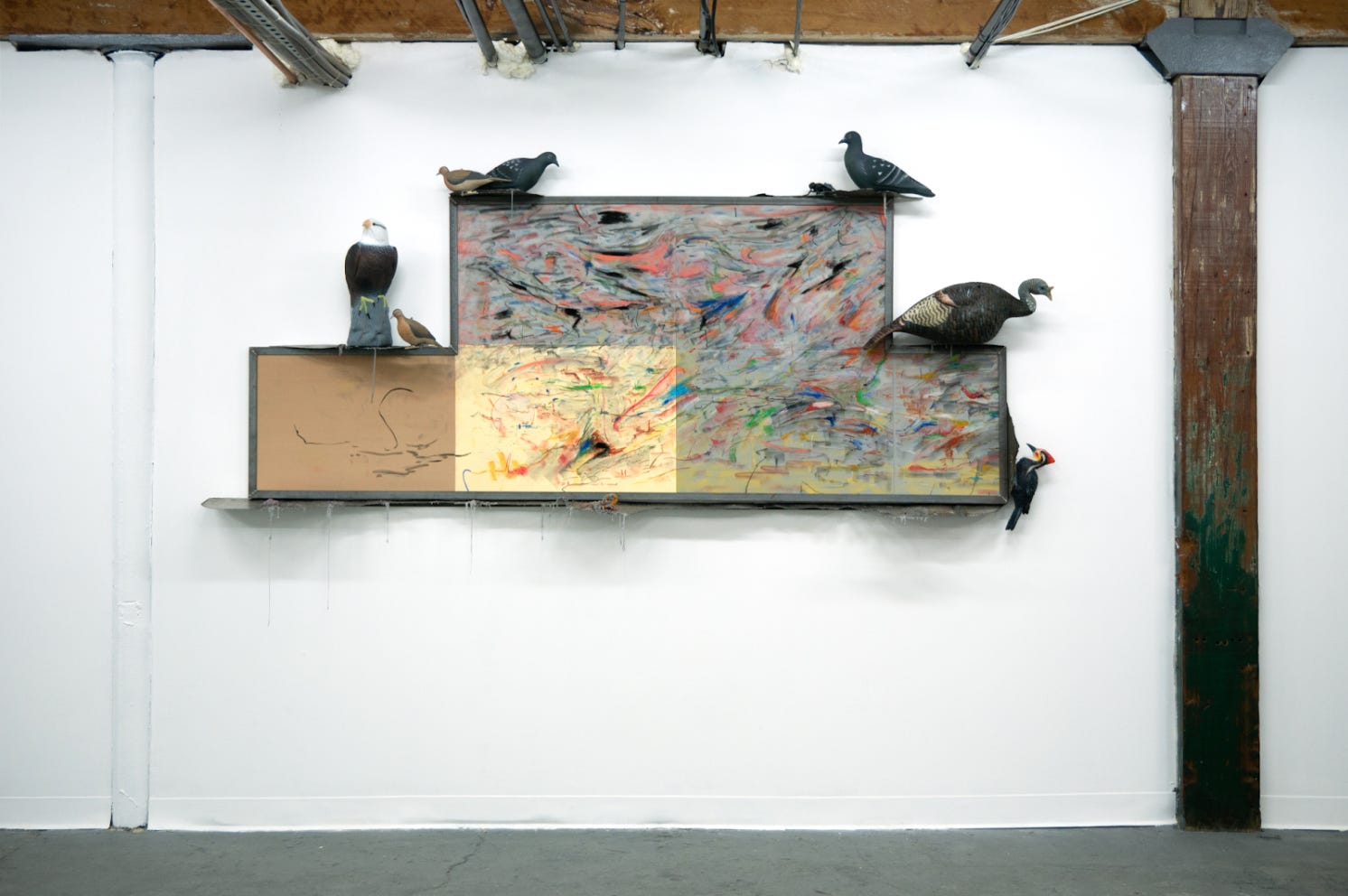
SOS: Can you go into how curation worked for Zach Hill’s show? How much was Zach involved in curating it vs FJORD members?
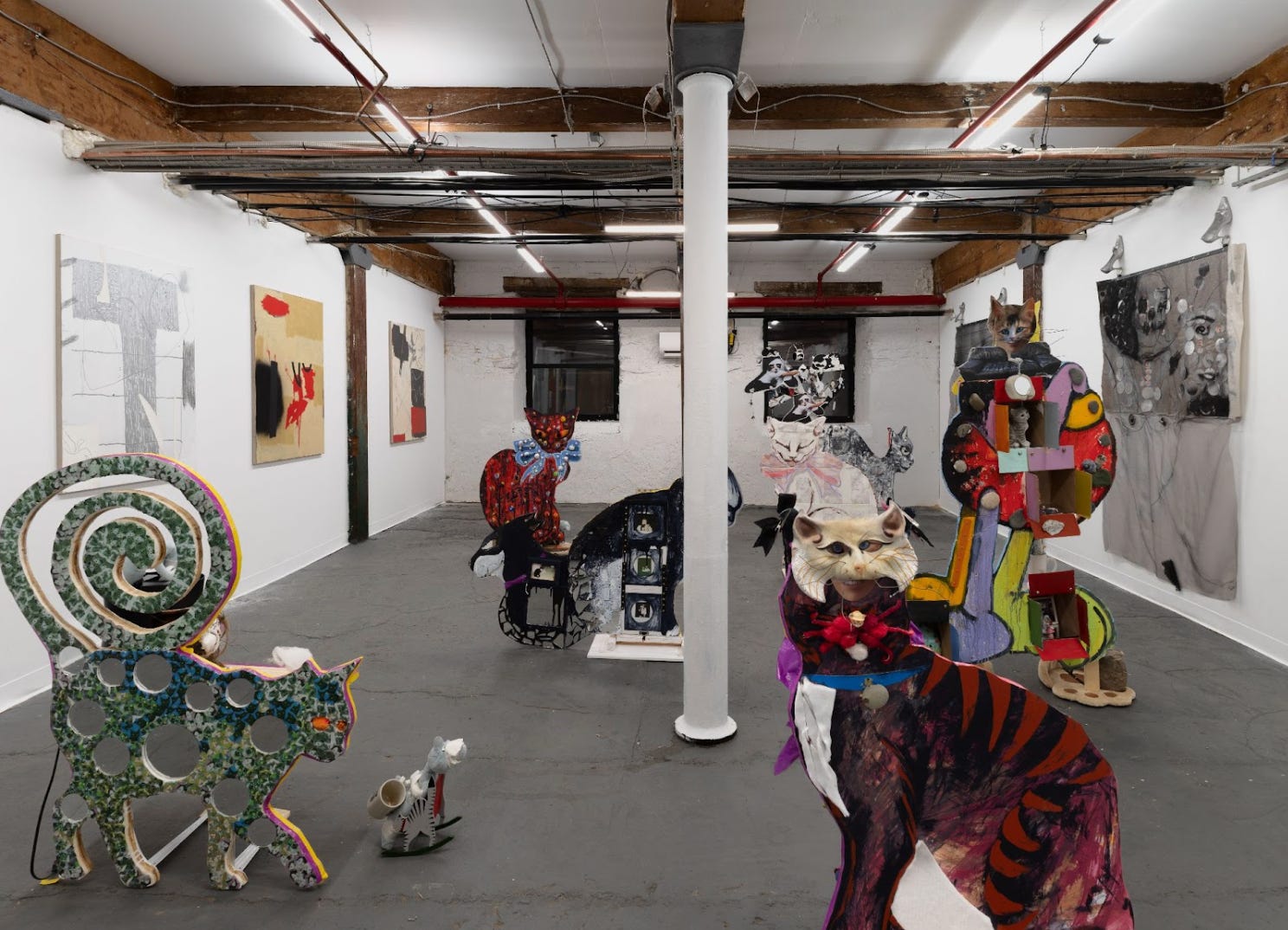
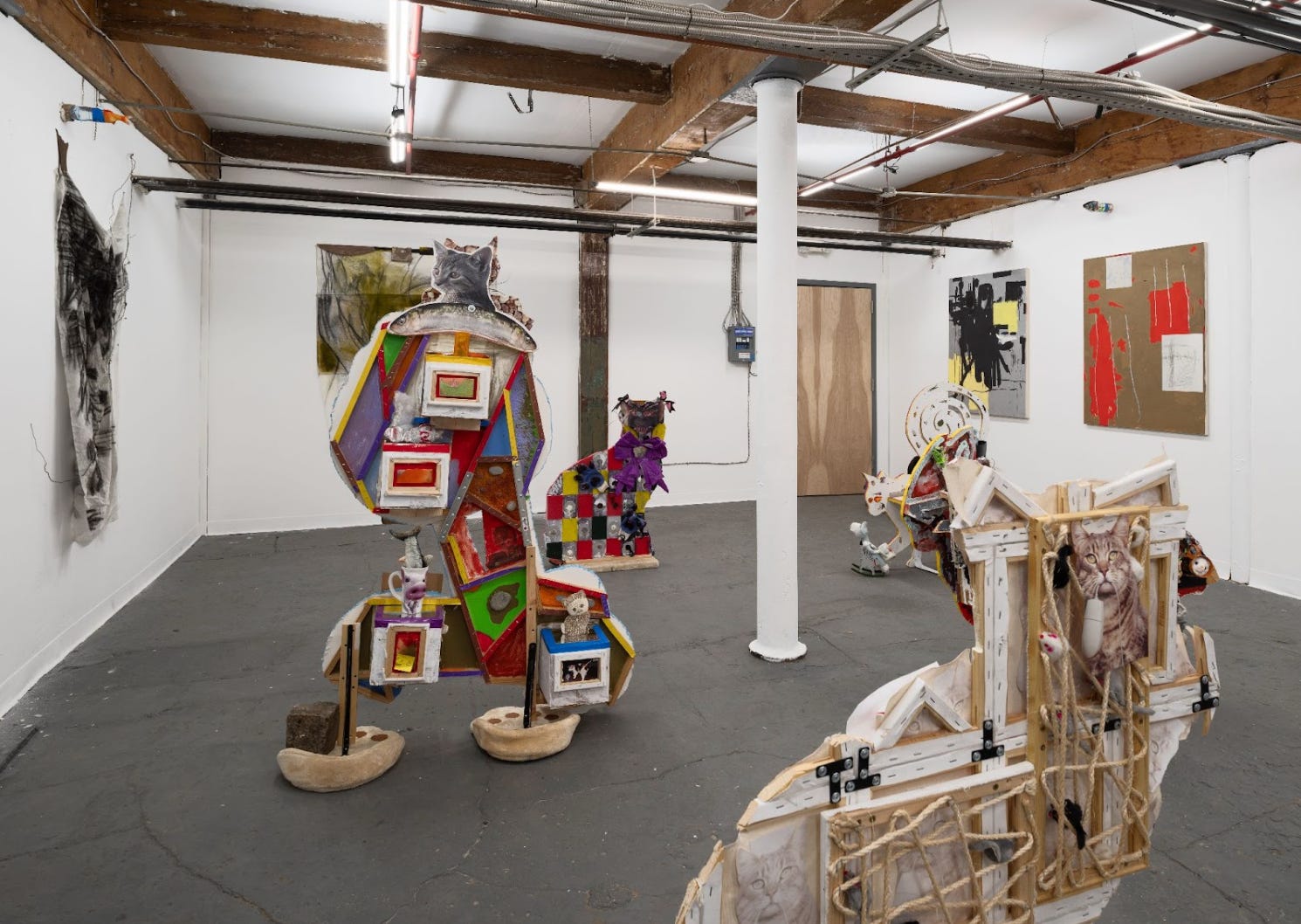
FD: We’ve worked with Zach before on an iteration of Zach’s Crab Shack, his curatorial outlet, showing the artists Ále Campos and Jordan Deal. For that project, we turned over the keys to the space and let Zach and his co-curator Jameson Paige run with it. For his solo show, the ethos was pretty much the same. While FJORD members were around to help with logistics and bounce ideas off of, ultimately, the curation was up to Zach. It’s rewarding to let an artist run with their ideas in the context of a solo show where they have complete freedom. We’re looking forward to a similar structure when we show another artist and curator, Libby Rosa, later this year.
SOS: You’ve now occupied three fundamentally different spaces—a rowhouse on Frankford Avenue, a unit in Crane Arts, and the ground floor of the Tie Factory at 1720 N. 5th. Anthony mentioned in 2023 that the white-box feeling at Crane started to feel “not quite our speed.” Can you talk about what the current space—with its red pipes and dungeony feel—actually does to the work you show? Is there art you’ve had to say no to because of the room?
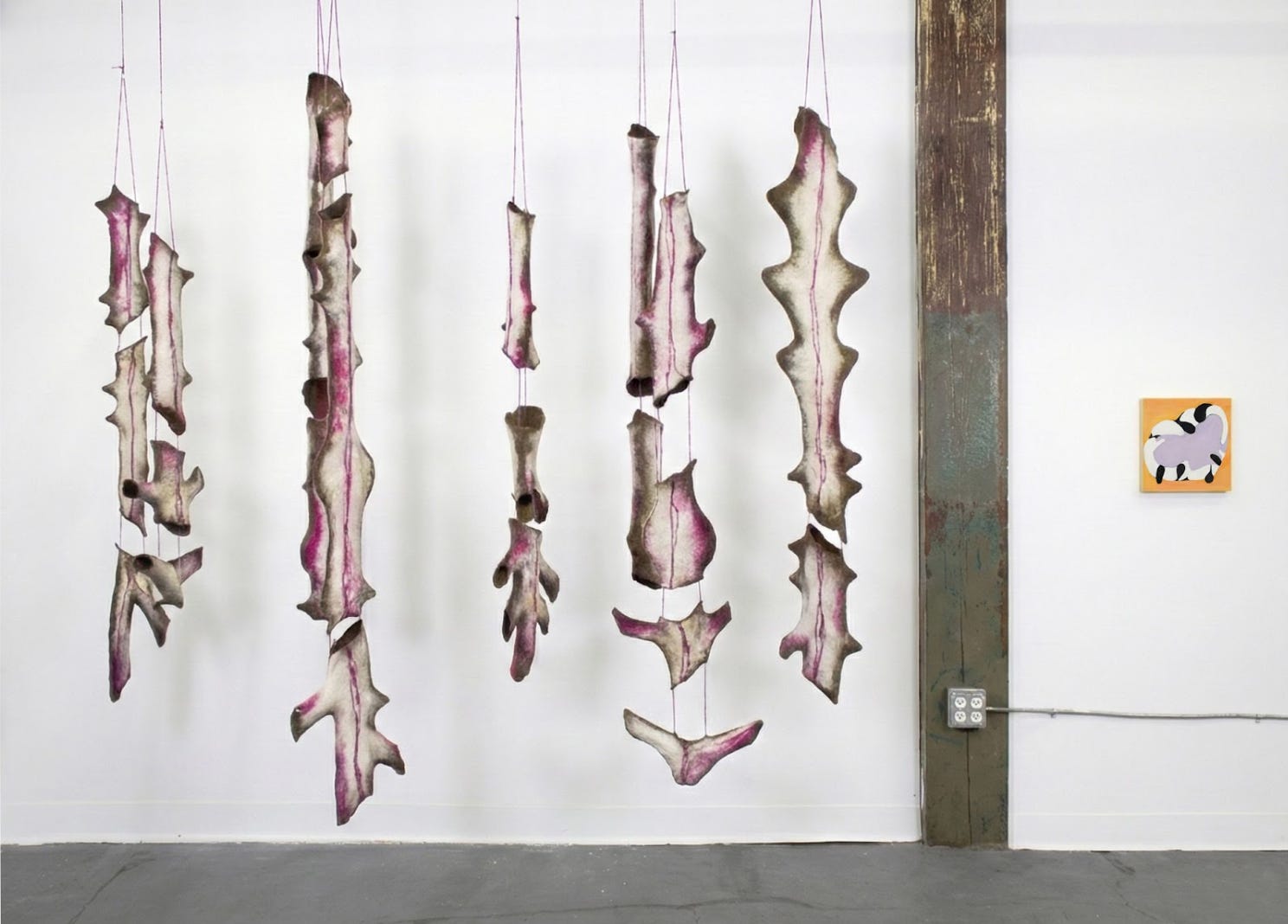
FD: The space we currently occupy strikes a good balance of professional presentation, with a hint of grunge and, most importantly, flexibility with management that allows for a decent amount of freedom in the hours we keep for the gallery and the type of art we are able to show. We enjoy being in the building with Mission in Arts to align events and occasionally lend each other more space. We are close enough to the Crane to join in on Second Thursdays when we want, without the pressure to commit. The pipes are a presence for sure, but one we have grown to live with (some members embrace them more than others!), and occasionally artists decide to work with them in their installs. Ruth Jeyaveeran, in our December show, hung her soft sculptures from the ceiling pipes. Fanni Somogyi, from our most recent open call, uses copper pipes in her sculptures, and we all loved how they felt they were emerging from our space. And Oakley Tapola and Hannah Lee Hall even inserted small sculptural objects into some of the cut-off pipe ends that still stick out of parts of the wall.
SOS: I’m still trying to get an understanding of the collector culture in Philadelphia. I know, as an artist-run/nonprofit space, you’re not necessarily beholden to collectors, but can you lift the veil at all for me?
FD: FJORD’s focus has always been about curating work that we find interesting and vital that might not have a space in more commercial projects that are driven by sales. Every once in a while, a collector might come through who is interested in purchasing an artwork, more often than not someone who already knew of the artist. But we make that pretty clear to the artists we work with; they shouldn’t be expecting to sell out. In Philadelphia, there are some stellar commercial spaces–Locks, Pentimenti, Fleisher/Olmann, among others. They have funds to do fairs, which connect them to a wider collectorship, and they also exist in more polished spaces and parts of the city that, perhaps, feel more comfortable to the collector class.
SOS: How do you navigate collector relationships with artists showing at your space? How often are you liaising these conversations, and dare I say, deals?
FD: At this point, we do not have a focus on cultivating collector relationships, and since we are a non-profit and run by a collective of (very busy) members, it would consume an inordinate amount of time and energy to make this our focus, likely for not much reward. Instead, our financial efforts are focused on concentrated fundraising: our annual open call and things like our anniversary and holiday parties. These events take a lot of time and effort to organize, and generosity from our community to be successful, and feel more in spirit with our mission to champion the arts. The fee from the open call, while waivable if someone can’t afford it, provides a crucial injection of funds that keep the lights on, and also serves to expand our awareness of potential artists for future shows. FJORD really only exists because people care, show up, and choose to participate in it.
SOS: Does it ever feel like Philadelphia has a ceiling for growth as an artist? Do you (any of FJORD’s members) ever feel pressure to move elsewhere (to a bigger art city) to grow your career, or no?
FD: It depends on what kind of artist you want to be and what kind of career you want to have. Philadelphia has certain limitations, but only if you’re interested in a very narrow idea of what success as an artist means. There’s obviously been a ton of pressure on higher education in recent years, and the closure of places like UArts has made it much harder to sustain a stable income through teaching, which was once the go-to path. But even among FJORD members, we hold a wide variety of day jobs, side-hustles, gigs, and hobbies. Sometimes growth as an artist comes through growth in other areas of life, and in that sense, Philadelphia still offers a great balance for working artists, even if it lacks the traditional blue-chip commercial galleries and institutional support.
Philly’s proximity to New York is also helpful. Artists in Philadelphia are showing in New York and having incredible careers. Yes, maybe it takes a little more hustle and legwork to get busy gallerists and curators into your studio, but more and more New Yorkers are moving to Philadelphia than the other way around, and with them, they bring their networks. We know many Philly artists who have made the leap to commercial spaces in New York without having to hustle to afford New York rent. It seems like a win-win. On the flip side, all the migration to Philly has definitely had an increasing impact in seeing affordable housing and studio spaces dry up (many studio buildings over the past few years have been sold and converted to luxury apartment complexes). Philly is distinct from New York, and that feels important. We are interested to see what changes Mayor Mamdani brings to the challenges facing New York’s affordability for artists and if similar solutions could be implemented in Philly.
SOS: Why have you chosen to root your practice in Philadelphia?
FD: Go Birds. But really, the energy in Philadelphia is more artist-directed for reasons we have touched on and therefore interesting to our own goals as makers. It is still (mostly) affordable for us to be here, but in order for it to stay that way, the city needs to prioritize helping our constituents who make the city the cultural hub that it is. The Illuminate The Arts grant is one such way the city has been making strides toward that effort, but it will need to do more to help arts orgs beyond Mural Arts and a few select institutions if it wants to continue attracting artists and the economic benefits they bring with them.
SOS: What do you see as the biggest missing piece in Philly’s art ecosystem right now—funding, space stability, collectors, documentation/archives, art criticism, something else?
FD: Funding is a big one! More plentiful and accessible funding would allow for all kinds of additional programming and general stability in this field. Another big need is more art-writing (we are so excited to see SOS emerging on the scene). This scene deserves a lot more notice than it gets, and with more attention will follow more opportunities for artists and arts organizations. Also, this sounds unrelated, but we need more investment in public transit to make getting to all of the art spaces around the city easier! What we wouldn’t do for an art bus.
SOS: Any current or upcoming shows you’d like to promote?
FD: We have a busy spring and summer!
Opening March 21st: Two-Person show, featuring Ava Hassinger and Christina Kerns, curated by Natessa Amin
Opening May 9th: Three-Person show, featuring Logan Crompton, Ryan Scails, and Jocelyn Tsui, curated by Sean Starowitz, a grouping that came out of our open call
Opening June 27th: A group exhibition responding to the World Cup, curated by Amira Pualwan